
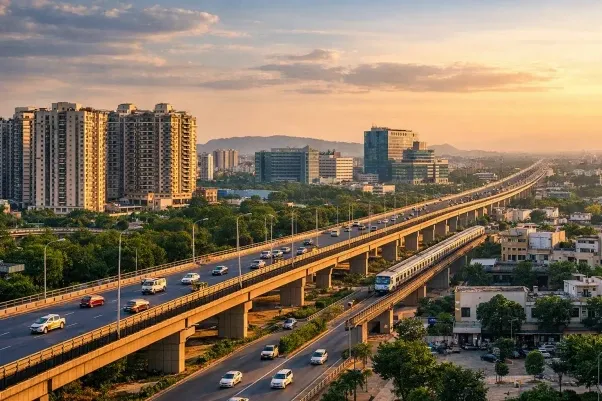
The real estate market in the Delhi National Capital Region has grown over the past decade. Developers built large housing projects across several NCR cities. Cities like Gurgaon and Noida led this growth for many years. These cities attracted companies, offices, and technology firms. Many workers moved there for jobs. Developers built many housing communities to meet this demand.
Faridabad followed a different development path. The city grew mainly as an industrial centre. Many factories and manufacturing units operate in different industrial areas of the city. Property prices in Faridabad remained lower than many NCR cities. Many homebuyers earlier preferred Gurgaon or Noida when they searched for modern housing communities.
This situation has started to change. Faridabad now attracts attention from homebuyers and property investors. Several factors support this change.
Improved infrastructure has strengthened connectivity across NCR. Roads and metro routes now connect Faridabad with nearby cities more easily. Buyers also find lower property prices in Faridabad compared with many NCR markets. Developers have also started launching new residential projects and township developments across the city.
Faridabad also benefits from its location in NCR. The city lies close to Delhi, Noida, and Gurgaon. These cities form major economic centres in the region. Highway networks connect Faridabad with these nearby markets. New infrastructure projects continue to improve travel access and regional connectivity.
Because of these factors, Faridabad now receives growing attention in NCR’s real estate market. Many buyers and investors now evaluate the city as a residential and investment location. The next sections explain the key reasons behind this growth.
Overview of Faridabad’s Growing Real Estate Market
Faridabad played a smaller role in the NCR housing market for many years. Buyers mostly viewed the city as a lower-cost option compared with Gurgaon and parts of Delhi. The city developed mainly as an industrial center. Many factories and manufacturing units operate in different industrial areas. Workers and professionals connected with these industries often chose housing close to their workplaces.
During the same period, Gurgaon and Noida expanded faster as residential markets. Large corporate offices and business parks developed in these cities. Developers launched many modern housing communities to serve this workforce. Because of this growth, many homebuyers focused their search on those cities instead of Faridabad.
Market conditions have started to change. Property prices increased across several NCR cities. Many buyers now search for housing markets where entry prices remain more manageable. Faridabad now attracts attention because it offers more affordable housing options compared with many nearby NCR markets.
Developers have also increased residential construction across the city. Builders now launch apartment projects, plotted developments, and integrated township layouts. These projects offer organized planning with internal roads, open areas, and shared facilities. Such planning attracts families who prefer structured residential communities.
Working professionals also support housing demand in the city. Many employees travel to nearby business districts in NCR for work. Improved road connectivity allows them to consider Faridabad as a residential location while working in nearby cities.
Property investors also evaluate the city for long-term growth. The city has a strong industrial base that supports employment. New residential projects continue to expand across multiple sectors. These conditions often attract investors who look for markets with future appreciation potential.
Reasons Faridabad Real Estate Market Is Growing
| Factor | Impact |
| Infrastructure growth | Better regional connectivity |
| Affordable property prices | Higher housing demand |
| Industrial base | Employment generation |
| New residential projects | Wider housing choices |
Infrastructure development plays an important role in this market shift. Improved regional connectivity now supports residential expansion across Faridabad. The next section explains how infrastructure projects influence this growth.
Infrastructure Projects Driving Faridabad’s Growth
Infrastructure strongly influences real estate growth. New highways and roads improve travel between cities and employment areas. Faster travel allows people to live in different cities while still commuting for work. This pattern appears across many NCR cities, including Faridabad.
Several infrastructure projects now connect Faridabad with major NCR markets. These projects improve regional mobility and open new areas for residential development.
Delhi–Mumbai Expressway
The Delhi–Mumbai Expressway is one of the largest highway corridors in India. The highway connects several major industrial and economic regions across multiple states.
This corridor passes near the Faridabad–Sohna stretch. The expressway supports faster freight movement and logistics transport. Many industries prefer locations with strong highway connectivity because it improves supply chain operations.
Industrial growth along this corridor can increase housing demand in nearby areas. Workers, managers, and service professionals often prefer housing close to employment locations. This pattern usually encourages residential development along major highway corridors.
Faridabad–Noida–Ghaziabad (FNG) Expressway
The Faridabad–Noida–Ghaziabad Expressway is a major regional road project in NCR. The corridor will create a direct road link between Faridabad, Noida, and Ghaziabad.
The project aims to reduce congestion on central Delhi routes. Direct connectivity will improve daily travel between these cities.
Travel time between Faridabad and Noida may reduce by about forty-five minutes after full completion. Faster travel will allow many professionals to consider Faridabad as a residential location while working in other NCR cities.
Residential development often follows major road corridors. Builders frequently launch apartment projects, plotted developments, and township layouts near such routes because better connectivity attracts homebuyers.
Greater Noida–Faridabad Transit Bridge
The Greater Noida–Faridabad Transit Bridge provides a direct road connection across the Yamuna River. Earlier, commuters used longer routes through Delhi to travel between these cities.
The bridge now allows faster movement for both commuters and commercial vehicles.
Key details of the project include:
| Detail | Information |
| Project cost | ₹315 crore |
| Location | Yamuna River crossing |
| Connectivity | Faridabad to Greater Noida |
| Travel time | Around 20 minutes |
The bridge also improves access to the Yamuna Expressway and nearby highways. The new route reduces congestion near the Kalindi Kunj corridor. Faster travel encourages housing demand in nearby areas because commuting becomes easier.
Faridabad–Jewar Airport Expressway
A greenfield expressway will connect Faridabad with the upcoming Noida International Airport at Jewar. Airport connectivity often influences property markets because businesses and travelers depend on quick airport access.
The new corridor will shorten the travel distance between Faridabad and the airport. Travel distance may reduce from about 90 km to nearly 31 km.
Key project details include:
| Detail | Information |
| Corridor length | 7.8 km elevated stretch |
| Project cost | ₹3,631 crore |
| Road capacity | Six lanes (expandable to eight) |
| Major connections | Eastern Peripheral Expressway, Yamuna Expressway |
Faster airport connectivity often attracts logistics companies, hotels, and service businesses. These industries create employment opportunities and increase demand for nearby housing.
Several residential developments have already started appearing near these connectivity corridors. One example is NeoLiv Township in Faridabad, a master-planned residential development located within the emerging residential belt connected to the Delhi–Mumbai Expressway network.
Together, these infrastructure projects improve Faridabad’s connectivity across NCR. Better mobility supports residential development and attracts both homebuyers and investors.
Jewar Airport and Its Impact on Faridabad Real Estate
The Noida International Airport is under construction in Jewar, Uttar Pradesh. The airport will become one of the largest aviation hubs in India after completion.
Large airports influence regional economies. Airports improve passenger travel and cargo transport. Better air connectivity supports business travel, tourism, and international trade.
Airport infrastructure also attracts many industries. Aviation services, cargo logistics, hotels, and corporate offices often develop near airports. These industries depend on fast movement of people and goods. When businesses grow near an airport corridor, nearby cities often see higher demand for housing and commercial property.
Jewar Airport may influence the Faridabad real estate market in a similar way. New road corridors now connect Faridabad with the airport region. These routes reduce travel time between the city and the airport. Faster travel makes Faridabad more practical for professionals who travel frequently or work in airport-linked industries.
Airport connectivity often creates new development corridors. Companies start evaluating land near transport routes for warehouses, hotels, offices, and residential projects. These developments create jobs in logistics, services, and hospitality. Employment growth gradually increases housing demand in nearby cities.
Some areas of Faridabad may benefit more from this development. Greater Faridabad, also known as the Neharpar region, already shows strong residential expansion. Improved airport connectivity may increase buyer interest in this area.
Ballabhgarh and nearby sectors located along major expressways may also see higher development activity. Builders often launch residential projects near strong transport corridors because connectivity improves property demand.
Improved airport access also supports mobility across NCR. Residents of Faridabad will reach the airport more easily through regional road networks and expressways. Easier travel supports business trips, tourism, and international trade activity.
Better transport links also strengthen regional economic integration. When cities connect through faster transport networks, businesses and workers move more easily between locations. This connectivity can strengthen Faridabad’s position within the NCR economy.
These changes in connectivity and economic activity continue to influence residential development across the city. The next section explains how new residential corridors have emerged in Faridabad.
Greater Faridabad (Neharpar) – The New Growth Corridor
Greater Faridabad, also called the Neharpar region, forms a major part of the city’s recent urban expansion. The name “Neharpar” refers to areas located beyond the Agra Canal.
Urban planners used this area to develop new residential sectors. The region offered large land parcels that supported organized development. Authorities introduced sector-based layouts with wider roads, residential blocks, and public facilities. This planning created a structured environment for long-term city growth.
Many older parts of Faridabad developed slowly over several decades. These areas contain mixed land use and smaller housing clusters. In contrast, Greater Faridabad provides planned sectors with organized infrastructure and road networks.
Residential development has increased steadily in this corridor. Builders have launched apartment projects, plotted developments, and township communities across several sectors. These projects usually include internal roads, open spaces, and community areas.
Several sectors in Greater Faridabad show strong residential activity. Important sectors include Sector 81, Sector 82, Sector 84, Sector 85, and Sector 86. Sector-based planning helps authorities manage roads, utilities, and public services more efficiently.
Large residential townships are also appearing in nearby sectors as the city expands eastward. Projects such as NeoLiv Plots Faridabad represent this new phase of planned residential development in the region.
Employment activity in Faridabad also supports housing demand in this region. The city hosts many manufacturing units and industrial companies. These industries create jobs in manufacturing, services, and logistics.
Many workers and professionals prefer housing close to their workplaces. Residential sectors in Greater Faridabad provide convenient access to nearby industrial areas. Because of this demand, developers continue to introduce new housing projects in the corridor.
Greater Faridabad now functions as one of the city’s main residential growth areas. Planned sectors, employment access, and expanding infrastructure continue to support development in this region.
Industrial Base Supporting Housing Demand
Faridabad is one of the major industrial cities in the National Capital Region. The city developed a strong industrial base during its early urban growth. Many manufacturing units, factories, and production facilities operate in different industrial areas.
Several industries operate in Faridabad. Manufacturing clusters produce machinery parts, engineering equipment, consumer goods, and automotive components. Many companies supply these products to businesses across India and international markets. These industries create jobs for workers with different skill levels.
Industrial employment influences where people choose to live. Factories and industrial units require technicians, supervisors, logistics staff, factory workers, and office employees. Many workers prefer housing close to their workplaces to reduce daily travel time.
Because of this pattern, residential demand often grows near industrial areas. Developers build housing projects in locations that provide easy access to employment zones. These projects include apartments, plotted developments, and independent houses that serve different income groups.
Industrial activity also supports many related businesses. Logistics companies, service providers, equipment suppliers, and retail shops often operate near industrial zones. These businesses create additional employment and increase demand for housing in nearby areas.
Faridabad also benefits from its location within NCR. Some residents work in local industries, while others commute to nearby business districts. Many professionals choose Faridabad because the city offers housing across different price ranges and maintains access to employment areas.
The city’s industrial base continues to support steady housing demand. Manufacturing clusters and related businesses create long-term employment. This connection between jobs and housing demand plays an important role in Faridabad’s real estate market.
Affordability Advantage Compared to Other NCR Cities
Property prices differ across cities in the National Capital Region. Gurgaon developed into a major corporate and residential hub. Many companies opened offices in the city. Developers built large residential communities to serve this workforce. Strong demand gradually increased property prices in Gurgaon.
Noida also expanded as a major housing market. The city follows a planned sector layout and maintains strong connectivity with Delhi. Residential and commercial development increased steadily in many parts of Noida. Housing prices in several sectors rose during the past decade.
Faridabad offers a different price level in this comparison. Residential property prices in Faridabad often remain lower than many areas in Gurgaon and Noida. Buyers can often purchase larger homes or residential plots within similar budgets.
Property Price Comparison in NCR Cities
| City | Pricing Level |
| Gurgaon | Premium |
| Noida | Mid to Premium |
| Faridabad | More Affordable |
Price differences influence how buyers evaluate housing markets. Lower entry prices often attract first-time homebuyers who want to purchase property with manageable budgets. Families searching for larger homes may also consider Faridabad because similar budgets can provide more living space or land area.
Investors also evaluate affordability when they study property markets. Many investors prefer cities where property prices remain moderate while urban development continues. These markets often offer long-term appreciation potential.
Faridabad fits this pattern in many cases. The city still offers accessible property prices compared with several NCR markets. Because of this advantage, many homebuyers and investors include Faridabad in their property search across the NCR region.
Faridabad’s housing market now offers several types of residential property. Developers introduced these housing formats as the city expanded and buyer preferences changed. Families choose housing based on budget, family size, and lifestyle needs.
Apartments remain one of the most common housing options in the city. Apartment buildings allow many families to live within organized residential complexes. These complexes usually include internal roads, parking areas, and shared open spaces for residents.
Plotted developments form another major housing category. Buyers purchase residential land plots in these projects. Owners can design and build houses according to their personal preferences. Many buyers choose plots because they offer flexibility in home construction.
Villas and independent houses provide larger living spaces than apartments. These homes include private entry and individual building layouts. Families who prefer more privacy often choose this housing type.
Independent floors also appear widely in NCR cities. In this format, each floor functions as a separate residential unit. Different families occupy separate floors within the same building.
Integrated townships represent a newer development trend in Faridabad. These projects combine residential areas with parks, internal roads, community facilities, and small commercial zones. Township planning creates organized residential environments. Township-style residential layouts have become more common across NCR cities, and developments like the NeoLiv residential project in Faridabad reflect this shift toward organized housing communities.
Many buyers now prefer gated residential communities. These communities include controlled entry points, landscaped open areas, and shared facilities. Developers increasingly include these features in new housing projects.
These housing formats show how Faridabad’s residential market now serves different types of homebuyers.
Important Social and Commercial Infrastructure
Cities need services that support daily life. Hospitals, retail centers, and commercial spaces help residents manage everyday needs. These facilities make residential areas more comfortable for long-term living.
One major healthcare facility in Faridabad is Amrita Hospital. The hospital is located in Sector 88. The facility has about 2,400 beds. It is one of the largest private hospitals in India. Patients from Faridabad and nearby NCR cities visit this hospital for treatment.
Access to healthcare influences many housing decisions. Families often prefer residential areas that provide quick access to hospitals and emergency services.
Faridabad also has large commercial and retail destinations. One major example is Omaxe World Street. This development covers about 50 acres and serves as a major retail and entertainment hub.
The complex includes shops, restaurants, entertainment zones, and public spaces. Many visitors come here for shopping, dining, and leisure activities.
Large commercial centers also support nearby residential growth. Residents often prefer housing locations close to shopping and daily services.
Healthcare facilities and commercial centers together strengthen Faridabad’s urban infrastructure. These services support daily life and improve the quality of residential living in the city.
Key Residential Hotspots in Faridabad
Faridabad has both older residential neighborhoods and new housing sectors. Some areas developed earlier because they lie close to Delhi. Other locations expanded later as the city grew outward.
Several established residential areas lie near the Delhi border. Surajkund, Greenfields Colony, Ashoka Enclave, and Charmswood Village are well-known neighborhoods in this zone. These areas benefit from their proximity to Delhi and from existing urban infrastructure.
Mathura Road forms another important residential corridor in Faridabad. The road connects the city directly with Delhi. Many residential areas along this route attract buyers who travel regularly between the two cities.
New residential growth has also appeared in the Neharpar region. This area represents one of the major expansion zones of Faridabad. Developers have introduced several housing projects across multiple sectors in this corridor.
Important sectors in this area include Sector 80, Sector 81, Sector 85, and Sector 86. Sector planning organizes roads, residential blocks, and local facilities in these locations.
Buyers often consider these sectors because they provide access to Delhi, nearby road corridors, and growing residential infrastructure. These areas also offer different housing options that suit various buyer budgets.
Faridabad’s housing market therefore includes both established neighborhoods and newly developing sectors. Together, these locations support the city’s expanding population and residential growth.
Future Growth Potential of Faridabad
Faridabad’s growth connects closely with the expansion of the National Capital Region. NCR cities continue to grow as population and economic activity increase. Housing demand often spreads to nearby cities that offer available land and good travel access. Faridabad benefits from this shift because it lies close to major business districts in NCR.
Economic projections show steady growth for the city. Analysts estimate that Faridabad may achieve around 8 percent annual GDP growth by 2030. This growth reflects the city’s industrial base, improving regional connectivity, and stronger economic integration with nearby NCR cities.
Economic expansion increases demand for property. Businesses create new jobs when industries and services grow. Workers move to cities where employment opportunities exist. These workers require housing close to their workplaces. Businesses also require offices, retail spaces, and service facilities.
Urban growth usually depends on three main factors: infrastructure, employment, and connectivity.
- Infrastructure improves roads, transport systems, and public facilities.
- Employment attracts workers and professionals to the city.
- Connectivity allows people to travel easily between homes and workplaces.
When these three factors grow together, cities usually see steady population growth and higher housing demand.
Faridabad shows signs of this growth pattern. Transport networks connect the city with nearby NCR locations. Industrial and service sectors provide employment for a large workforce. Developers continue to build new residential communities across the city.
These factors support Faridabad’s long-term urban expansion and future real estate growth.
NeoLiv Township – A New Master Planned Development in Faridabad
Developers now introduce township-style housing projects in Faridabad as the city expands. These projects organize residential living within planned layouts. The layouts usually include housing areas, internal roads, parks, and community facilities.
NeoLiv Township is one such development in Faridabad. The project covers about 62 acres of land. The development is located in Sector 98 and Sector 99A. These sectors lie within one of the city’s growing residential corridors.
Township projects often include multiple housing options in one community. Buyers can choose housing based on their budget and lifestyle needs while living in the same planned environment.
Housing Options in the Township
| Type |
| Plots |
| Villas |
Township communities also include shared facilities that support daily living. Planned amenities in this project include a clubhouse, landscaped gardens, internal retail spaces, and security systems.
These facilities help residents access daily services inside the community. Organized township planning also improves convenience and community interaction for residents.
Projects like NeoLiv Township show the growing trend of planned residential communities in Faridabad. Developers now focus on structured layouts that combine housing, open spaces, and essential facilities in one development.
Conclusion
Faridabad’s property market continues to grow as the National Capital Region expands. The city now plays a stronger role in the regional housing market.
Infrastructure projects improve connectivity between Faridabad and nearby NCR cities. Better travel access allows many professionals to live in Faridabad while working in other business districts.
Faridabad also offers more affordable property prices than several NCR markets. Many first-time homebuyers and families consider the city because they can purchase larger homes within manageable budgets.
Residential development continues to expand across many sectors. Developers now build planned communities, township projects, and organized housing layouts across the city. Developments such as NeoLiv Township in Faridabad illustrate how new residential communities are becoming part of the city’s expanding housing landscape.
These developments support the needs of a growing population and an expanding urban economy.
Faridabad is gradually transforming from an industrial city into an important residential and investment destination in the National Capital Region.
FAQs
Why is Faridabad becoming popular for real estate investment?
Faridabad attracts homebuyers and investors because the city offers improving connectivity, expanding infrastructure, and relatively affordable property prices. Developers also launch new residential projects in several sectors of the city.
What infrastructure projects support the Faridabad property market?
Several projects improve connectivity in Faridabad. Major road corridors, expressways, and regional transport routes connect the city with other NCR markets. These projects reduce travel time and support residential demand.
How will Jewar Airport affect Faridabad real estate?
Jewar Airport will improve air connectivity in the NCR region. New road links between Faridabad and the airport will reduce travel time. Better access to the airport may increase business activity and housing demand in nearby areas.
Is Faridabad cheaper than Gurgaon and Noida?
Yes. Property prices in Faridabad usually remain lower than many areas in Gurgaon and Noida. Many buyers choose Faridabad because they can purchase larger homes within similar budgets.
Which areas are good for property investment in Faridabad?
Several locations attract buyer interest in Faridabad. Established neighborhoods near Delhi remain popular residential areas. Expanding sectors in Greater Faridabad also show strong housing development and investment activity.